
Re
Pitching a tent doesn’t have to be a struggle. With the right steps (and a little patience), you can have your home-away-from-home standing tall in no time. In this guide, I’ll walk you through how to prep your campsite, set up your tent, and choose the right type of tent for your adventures.
Before you even open the bag, spend a couple of minutes scouting.
Look for flat, level ground — you don’t want to roll into a corner overnight.
Avoid low spots that could collect water if it rains.
Stay clear of roots, rocks, or sharp sticks.
If possible, pick a spot with a little morning shade so you’re not roasting at sunrise.
👉 Pro Tip: Do a quick “lay down test.” If it’s comfortable to stretch out on, it’s good for your tent. Also, other campers may have left a ground imprint, which could help you identify the best spot.
Remove small rocks, pinecones, or sticks.
Lay down a footprint (ground tarp) which is slightly smaller than your tent floor. This protects your tent from moisture and abrasion.
If you don’t have a footprint, a trimmed tarp works fine — just keep edges tucked under so rain doesn’t pool.
Spread everything out before you start:
Tent body
Rainfly
Poles
Stakes/pegs
Guy lines (ropes)
This way you’re not searching for pieces mid-setup.
Most modern tents use shock-corded poles that snap together easily.
Lay them flat, then connect the sections.
Place them across your tent body as shown in the instructions.
👉 Don’t force them — if something doesn’t fit, recheck the pole order.
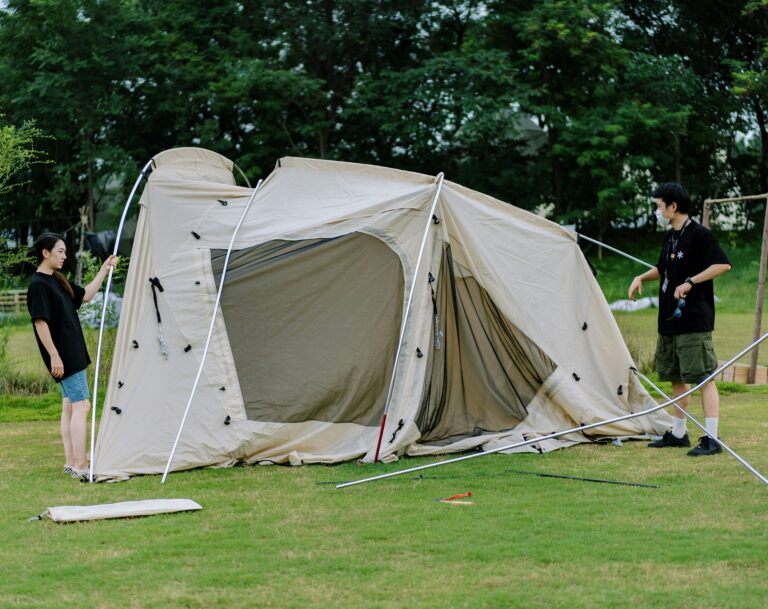
Slide poles through the sleeves or clip them into place.
The tent will start to take shape — lift it gently upright.
Stake down the corners first for stability.
The rainfly is your tent’s umbrella.
Drape it over the frame.
Clip or tie it into place (each tent is a little different).
Make sure the door openings line up with your tent doors.
Drive stakes at a 45° angle, pointing away from the tent.
Pull guy lines snug (but not guitar-string tight).
This adds stability in wind and keeps the rainfly off your tent walls (reduces condensation).
Step inside, stretch out, and check for floor wrinkles (pull the fabric until smooth).
Shake the rainfly — if it brushes the tent body, adjust your guy lines.
Tent Types (extra help)
Most common beginner style.
Easy to set up, stable in wind, good for 2–4 campers.
Tall, straight walls = lots of headroom.
Best for car camping or families.
Heavier and bulkier.
Open the bag → tent springs up.
Awesome for festivals or quick overnight trips.
Not as durable in bad weather.
Lightweight, compact, designed for hikers.
Usually smaller and more expensive, but perfect when every ounce counts.
Setting up a tent is a skill that gets easier every time you practice. Start with ground prep, take your time with the poles and rainfly, and you’ll have a reliable basecamp ready in minutes. Once you know the steps, you can focus on what really matters — relaxing, cooking up something tasty, and enjoying the outdoors.
If you’re a first-timer, practice pitching your tent at home before heading out. It saves time, stress, and maybe even an argument in the woods!
For additional camp set up tips see my article 15 easy camping tips every camper should know.